Project Learnings
For my first end-to-end app design, I got to dive into every step: from early research to final UI. Along the way, I learned that good design isn’t just visual; it’s also about using the right words and giving users the context they need. Overall, I learned a lot and am excited for future projects!
For future development, I recommend further user research to better understand user needs. Besides adding new features, it would be valuable to offer more customization options, letting users tailor their dashboards to the data they find most important.
The Next Steps
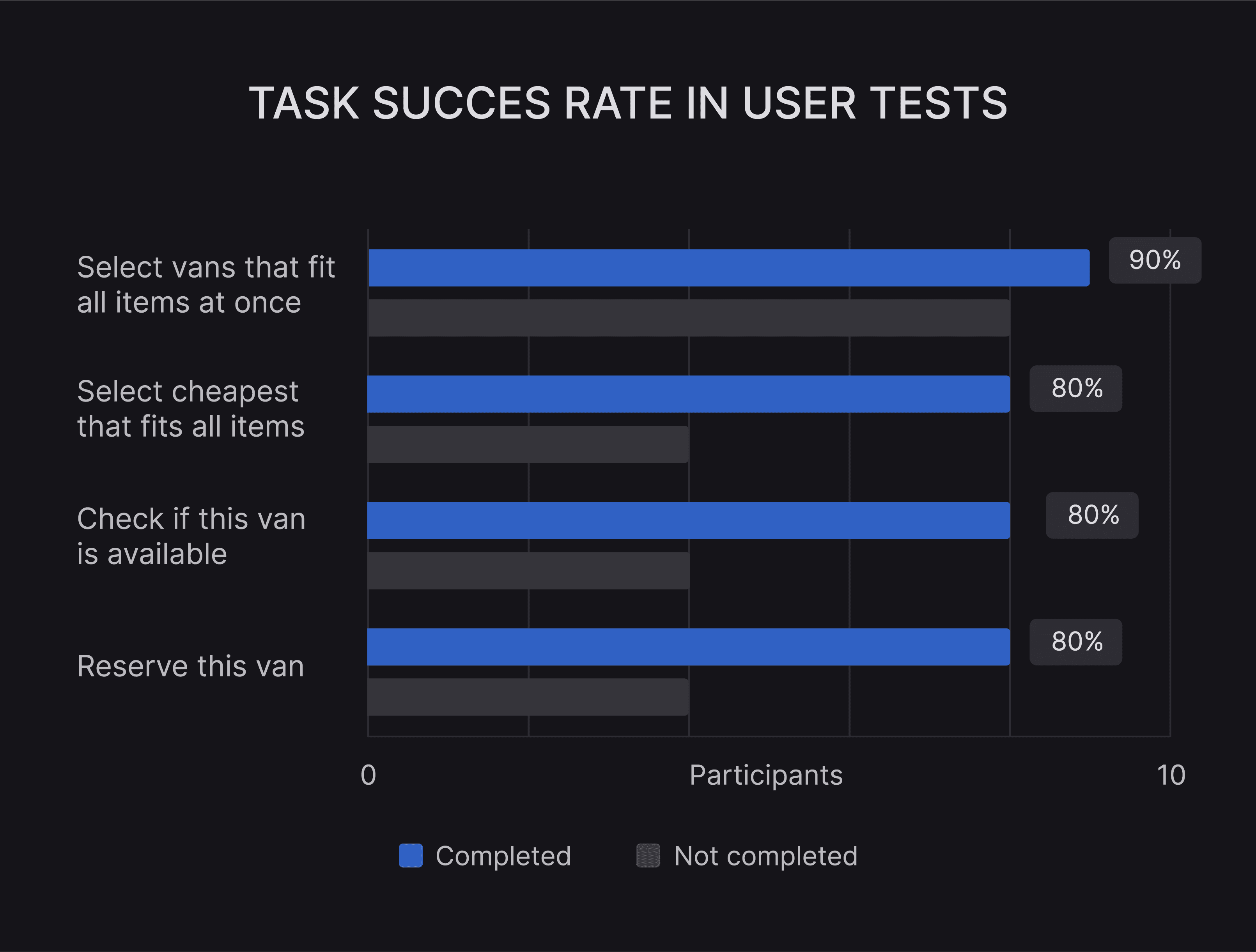
Task Success Rate: 80% Booking Completion
After creating the prototype, I tested whether the process of finding the right van and completing a booking, which potential customers previously struggled with, could now be completed more successfully.
The results showed a clear improvement. Task success rates increased from 40% to 80% for completing the full booking journey. Users also shared that the experience felt smoother and more intuitive.
User Testing: How did we improve the results?
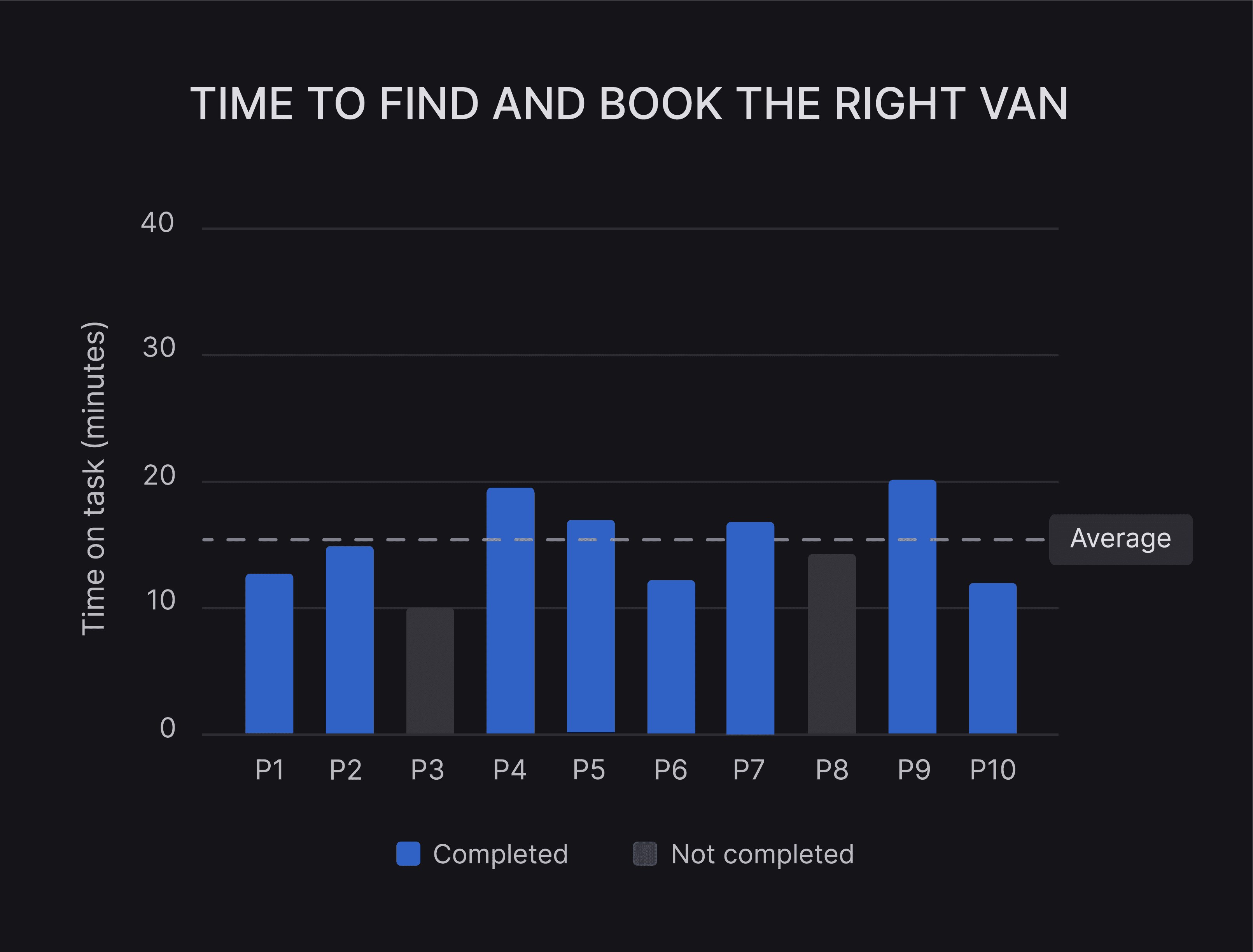
Another important metric that had to be improved is the time on task for finding and booking the right van. On average, this process previously took 28 minutes, causing friction and unnecessary drop-offs.
By integrating the AI Van Finder, we reduced the average completion time to 15.5 minutes: an improvement of almost 45%. A clear metric that shows a faster and more effective booking process.
Time on task: Improved by nearly 45%
AI-Powered Booking Flow: Find the Right Van for You
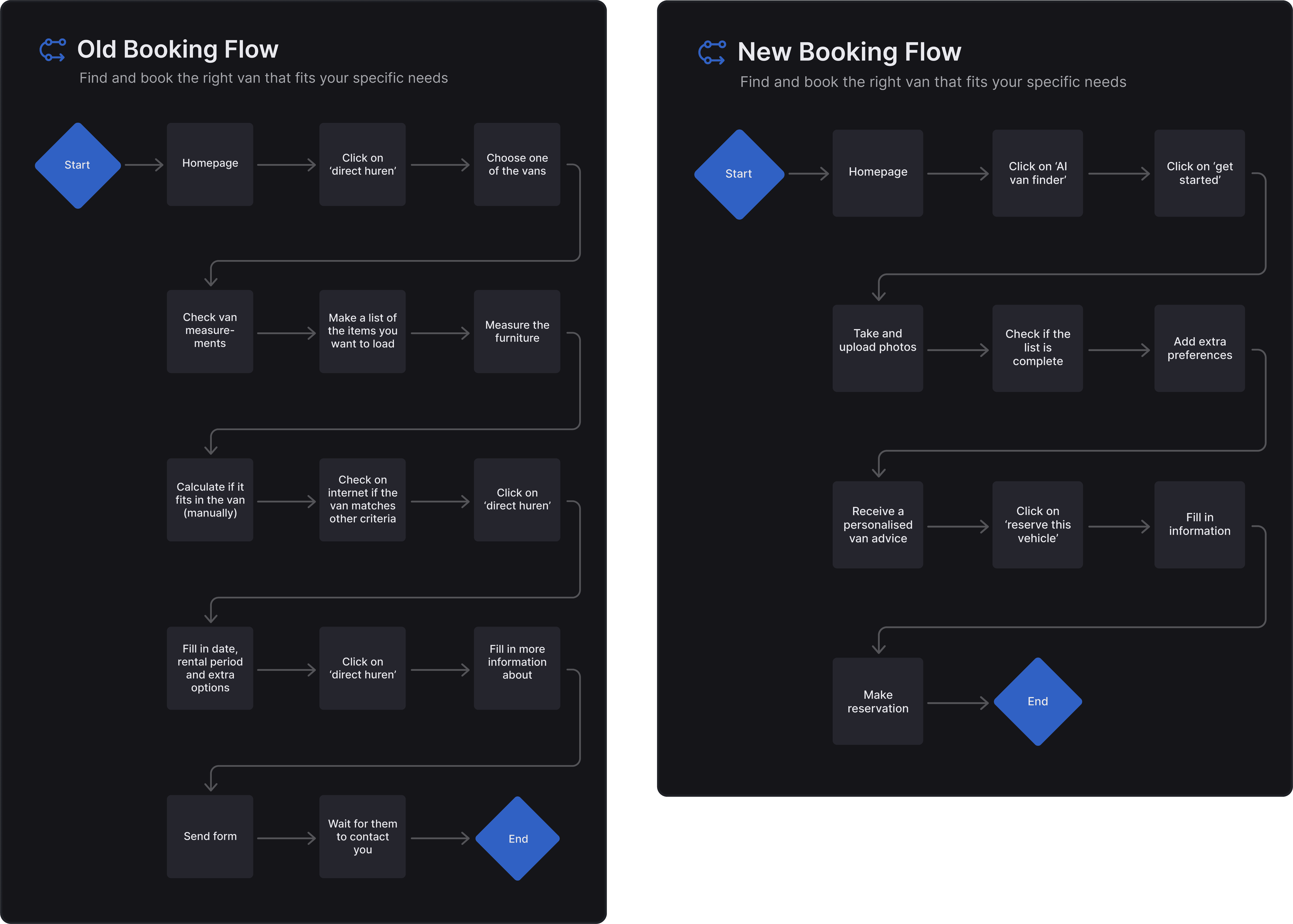
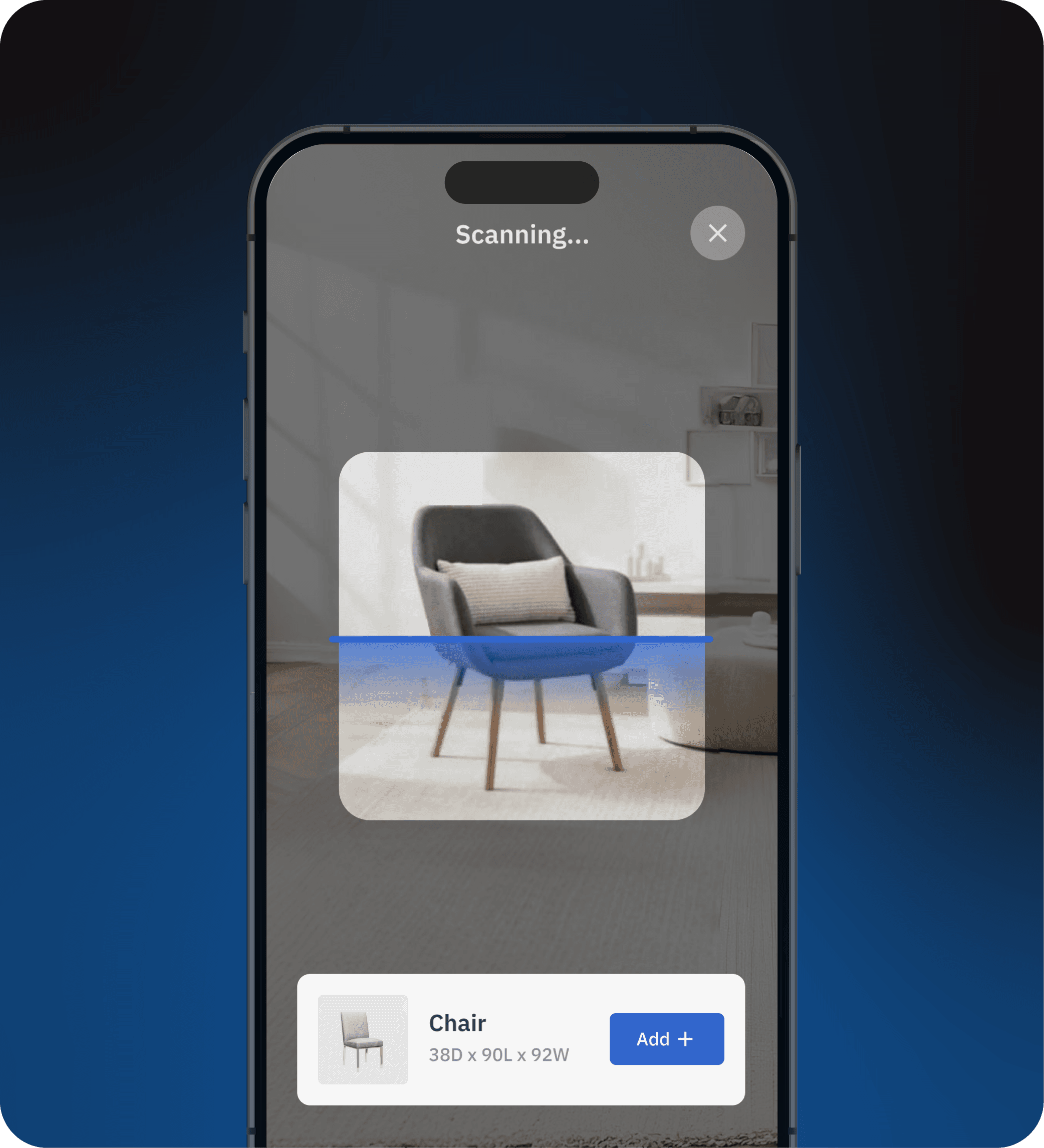
AI Van Advice helps users choose the right van. Renters upload photos of their cargo and share preferences, and receive a recommendation that fits their needs at the best available price.
UX RESEARCH
Understand user needs and define the project goals.
Design
Develop high-fidelity designs, focusing on usability and aesthetics.
Test & Refine
Conduct usability testing to identify and solve potential pain points.
User Testing: Important Tasks are Hard to Perform
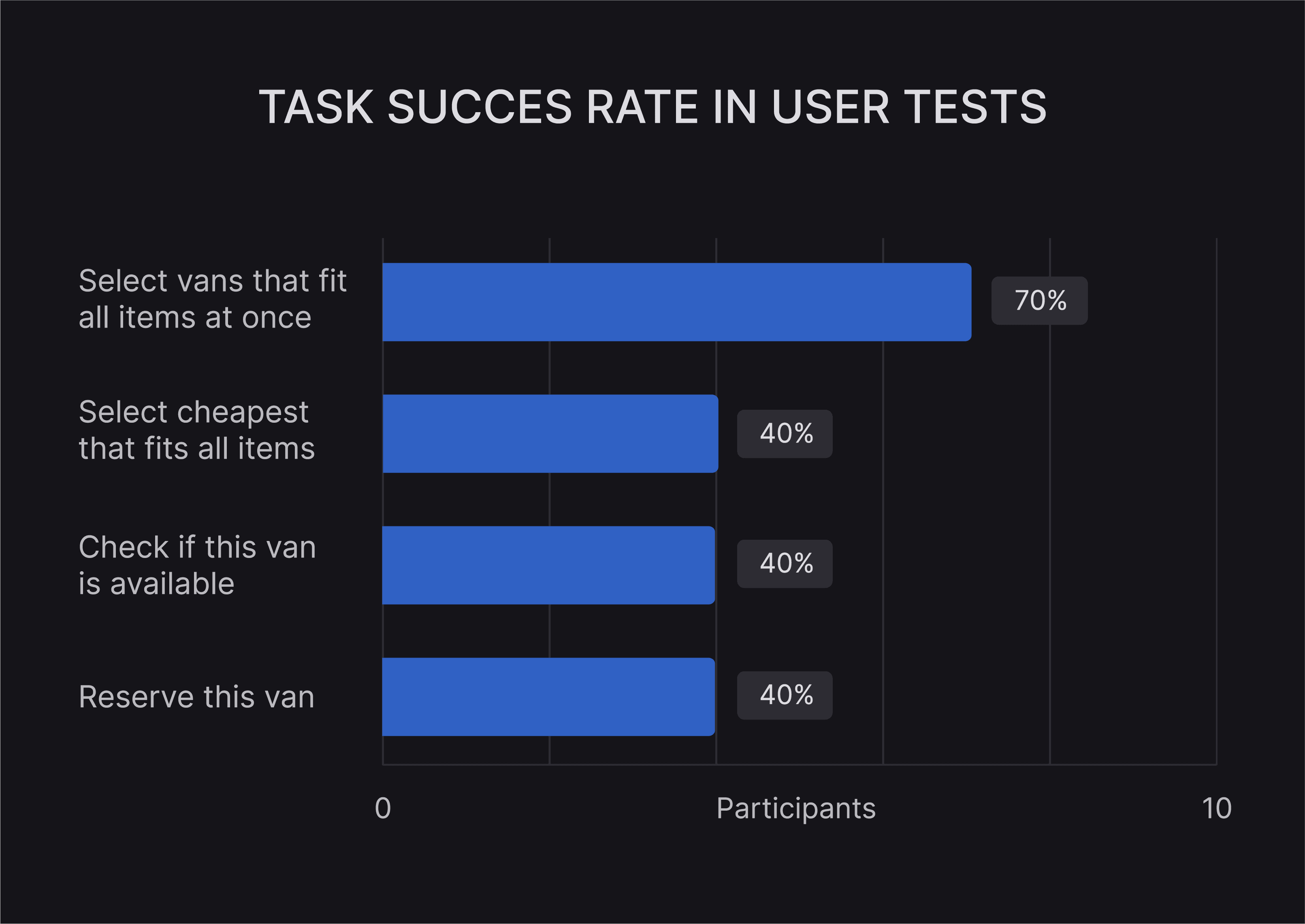
After the interviews, I asked participants to complete four tasks they would also typically perform when renting a van. I measured the success of the tasks by whether they could complete each action using the website only.
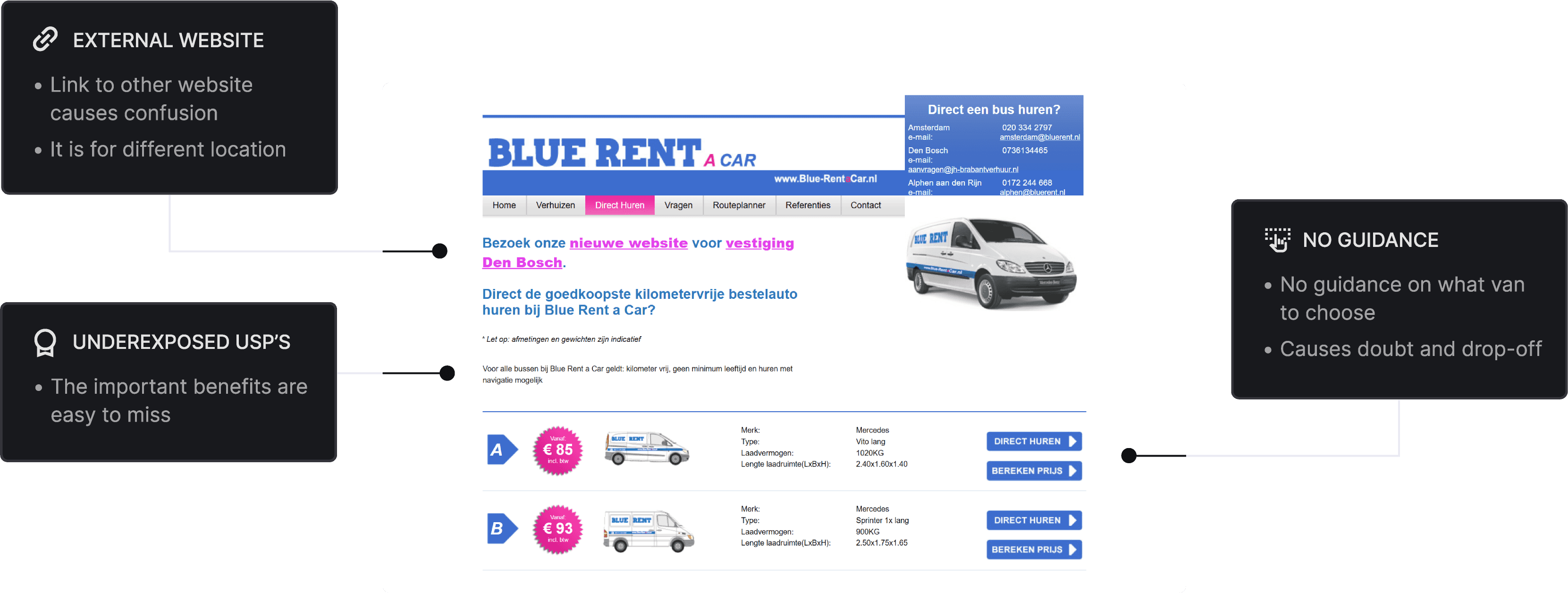
A simple task 'Checking the availability' performed well. However, we ran into problems when users had to complete more complex tasks such as choosing which of the vans specifically fits their needs and booking this.
About Blue Rent
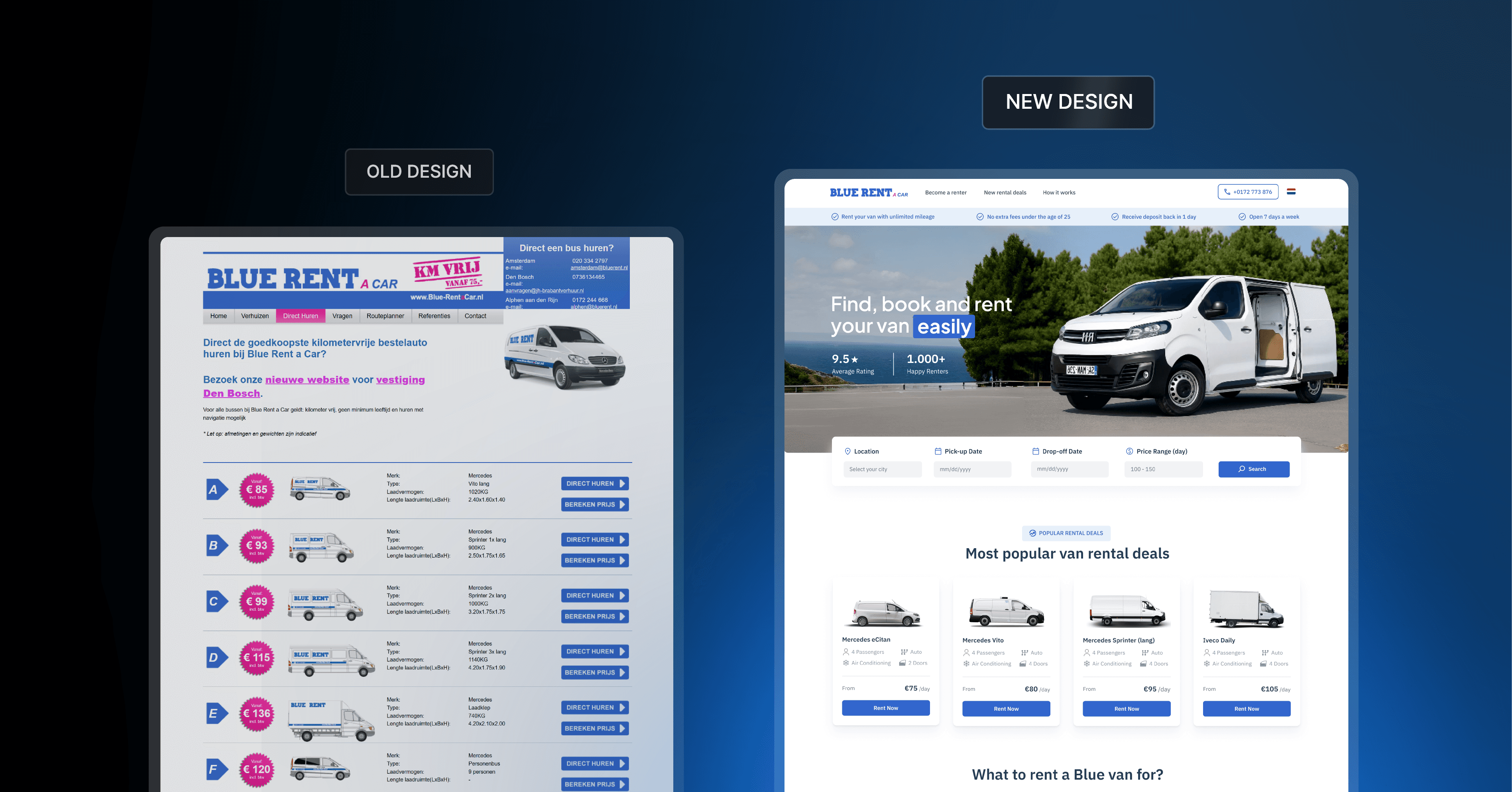
BlueRent is a van rental company based in Alphen aan den Rijn, where I live. Their service is excellent and the team is genuinely friendly. After their company was recently affected by a major fire, I decided to surprise them with a free website redesign.
Even though their website is an important source of clients, the website is outdated and no longer conveys credibility. The booking process is slow, error-prone, and lacks a smooth flow, which results in lost conversions. Time to address these issues!
Why a Redesign?
Interviewing Potential Customers of BlueRent
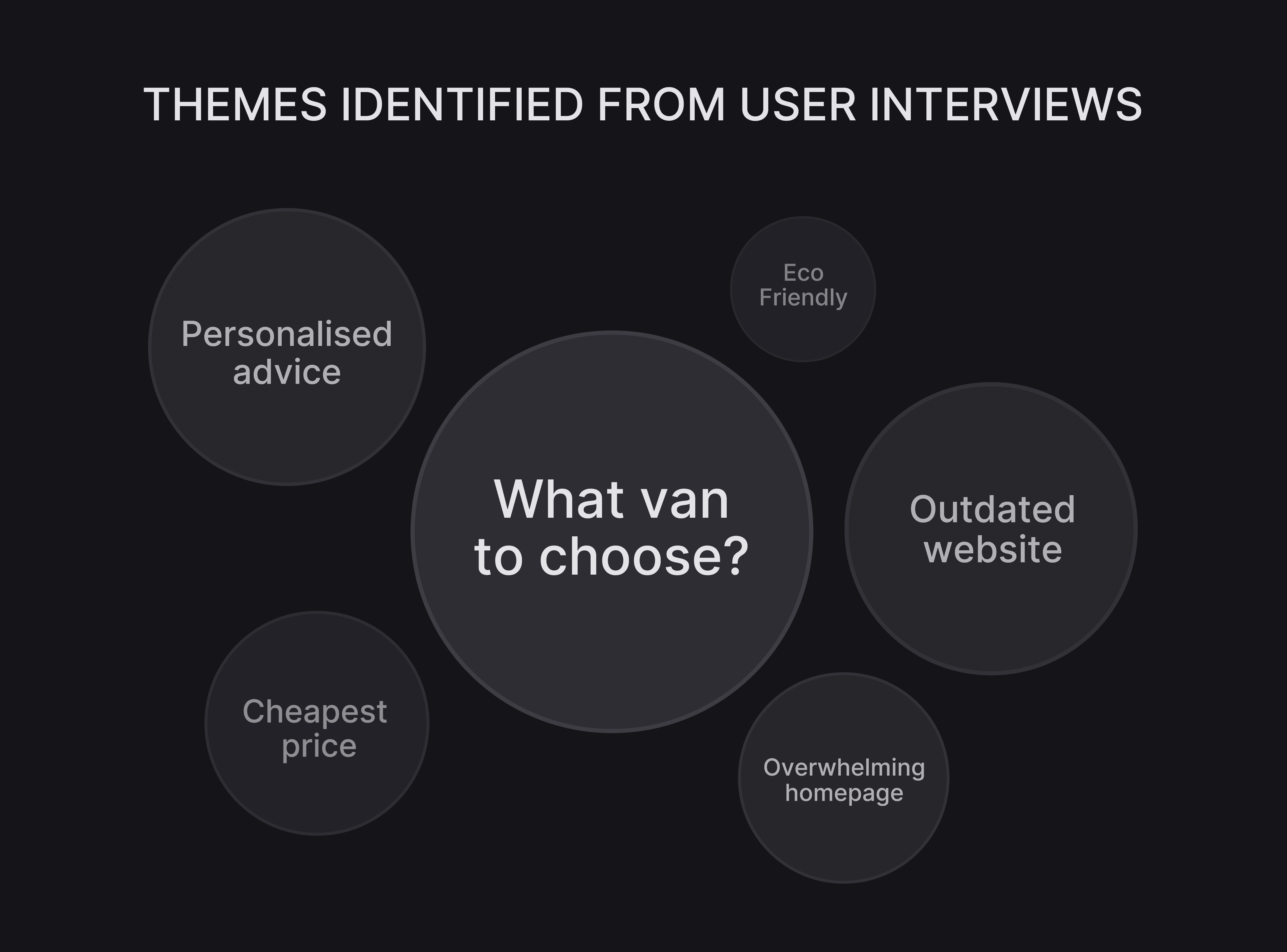
To understand how potential customers experience renting a van with Blue, I interviewed 10 people who periodically rent a van. I asked participants questions about their opinion on the design, challenges they face when booking and how it influences their decision to rent. Two themes stood out:
Customers want guidance in choosing the right van
The website felt overwhelming and unprofessional leading to a reduction in credibility
UX Research: What is the Current Experience like?
ANALYZE
Brainstorm ideas and explore multiple design directions.
Design
Develop high-fidelity designs, focusing on usability and aesthetics.
Test & Refine
Conduct usability testing to identify and solve potential pain points.
Role
UI / UX design, UX research
Project
Website Redesign
Tools
Figma, UXtweak
Timeline
Oct - Dec 2025

Project learnings
6
For my first end-to-end app design, I got to dive into every step: from early research to final UI. Along the way, I learned that good design isn’t just visual; it’s also about using the right words and giving users the context they need. Overall, I learned a lot and am excited for future projects!
The next steps
For future development, I recommend further user research to better understand user needs. Besides adding new features, it would be valuable to offer more customization options, letting users tailor their dashboards to the data they find most important.
43s
9
8.6
Participants tested the prototype
Average time to complete a task
Iterations made after user testing
Final user test usability rating
Analyzing: Solving the issues with Smart Design
The Fun Part: Redesigning The Website
Design

Develop high-fidelity designs, focusing on usability and aesthetics.
ANALYZE
Brainstorm ideas and explore multiple design directions.
Research
Understand user needs and define the project goals.
Test & Refine
Conduct usability testing to identify and solve potential pain points.
ANALYZE
Brainstorm ideas and explore multiple design directions.


OUTDATED & OVERWHELMING
Clients drop off due to the outdated and overwhelming look of the website, which hurts credibility.
OUTDATED & OVERWHELMING
Clients drop off due to the outdated and overwhelming look of the website, which hurts credibility.
How do we solve these problems?
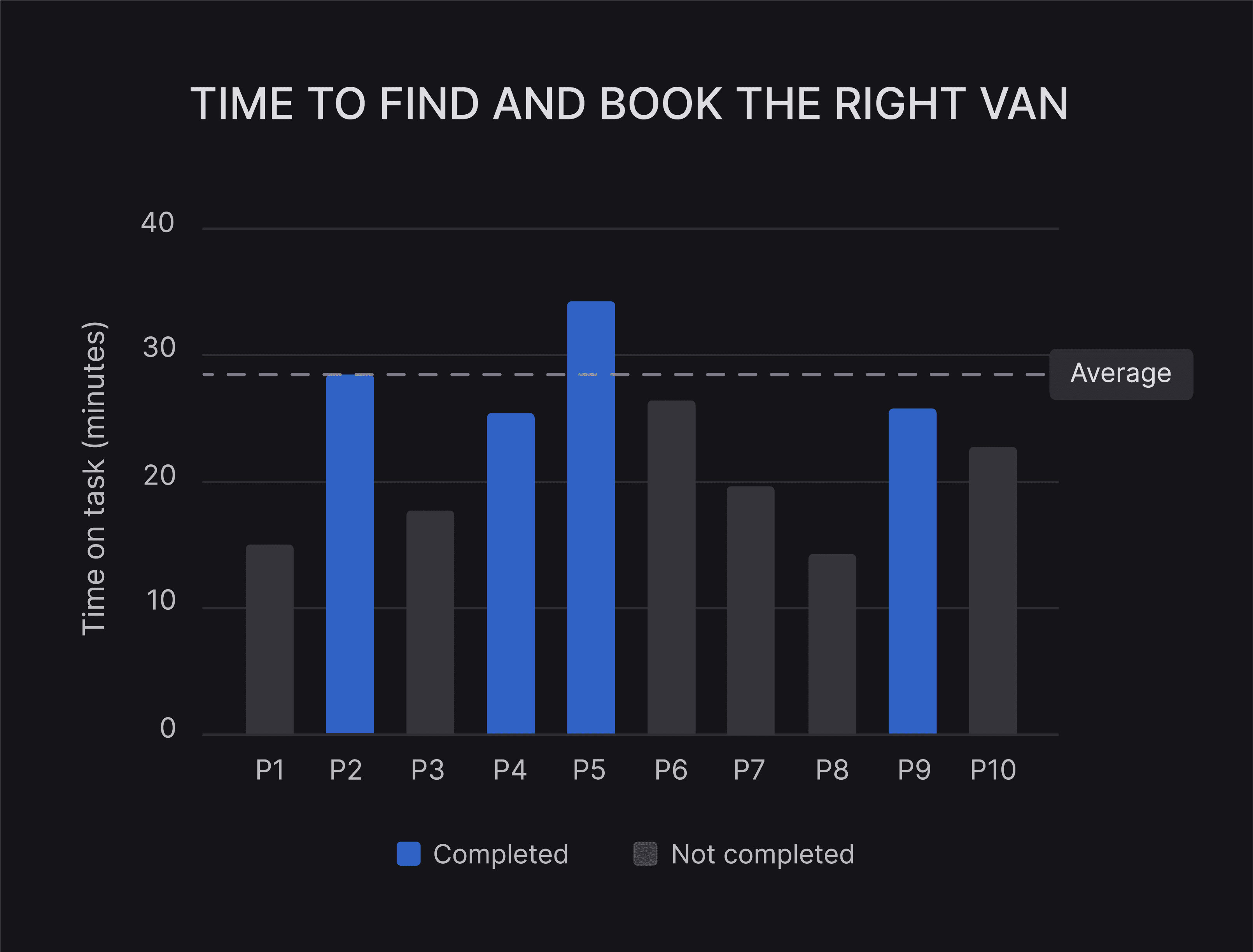
The problems become even more clear when looking at the time on task for selecting and booking the right van: The most important flow users must complete on the website. To measure how long this took, I used UXtweak.
The results varied significantly, but the average completion time was 28 minutes: far too long. Three participants even dropped out due to the friction in the booking process.
UX RESEARCH
Understand user needs and define the project goals.

It Takes too Long to Find and Book the Right Van
Renters want to find the best van quickly and with minimal effort, but the process of choosing the right van is time consuming and frustrating. An AI-powered flow simplifies this by suggesting the best option based on renters needs.
Credibility is important when choosing where to rent. The outdated UI raises doubts about reliability. A redesigned UI can make BlueRent appear more trustworthy.
Performing an UI Analysis
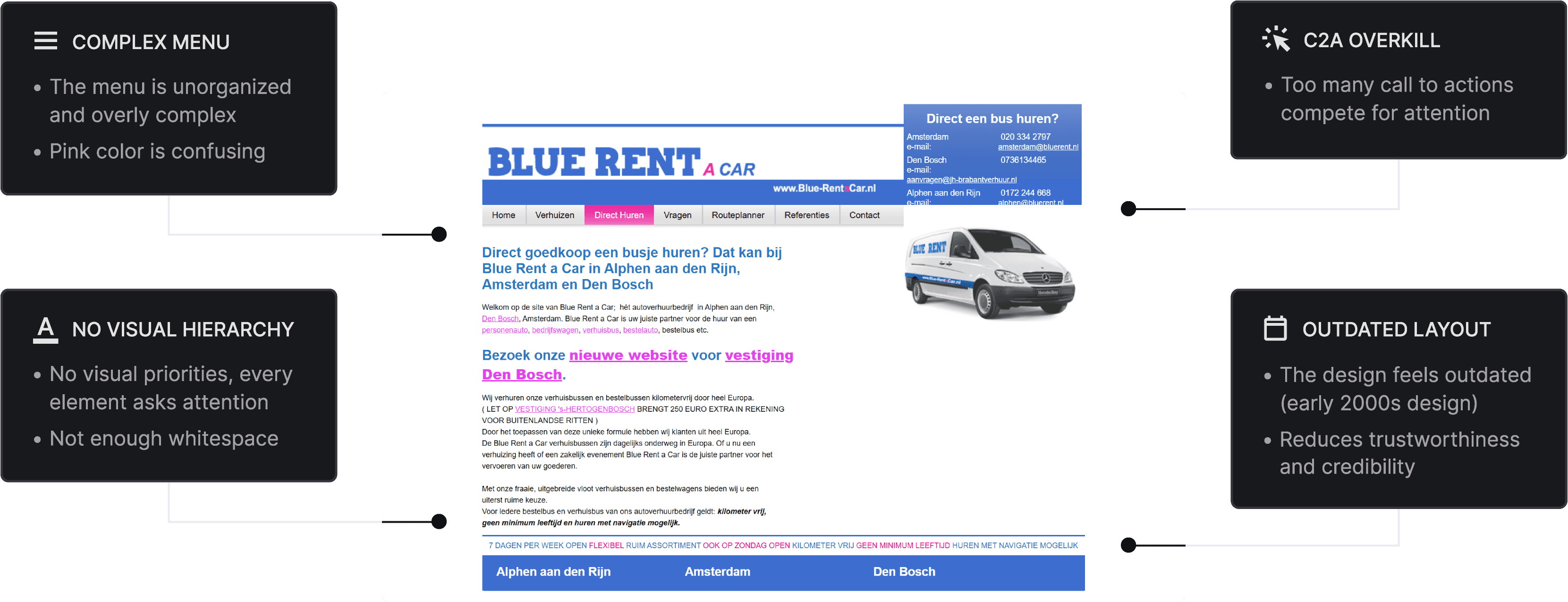
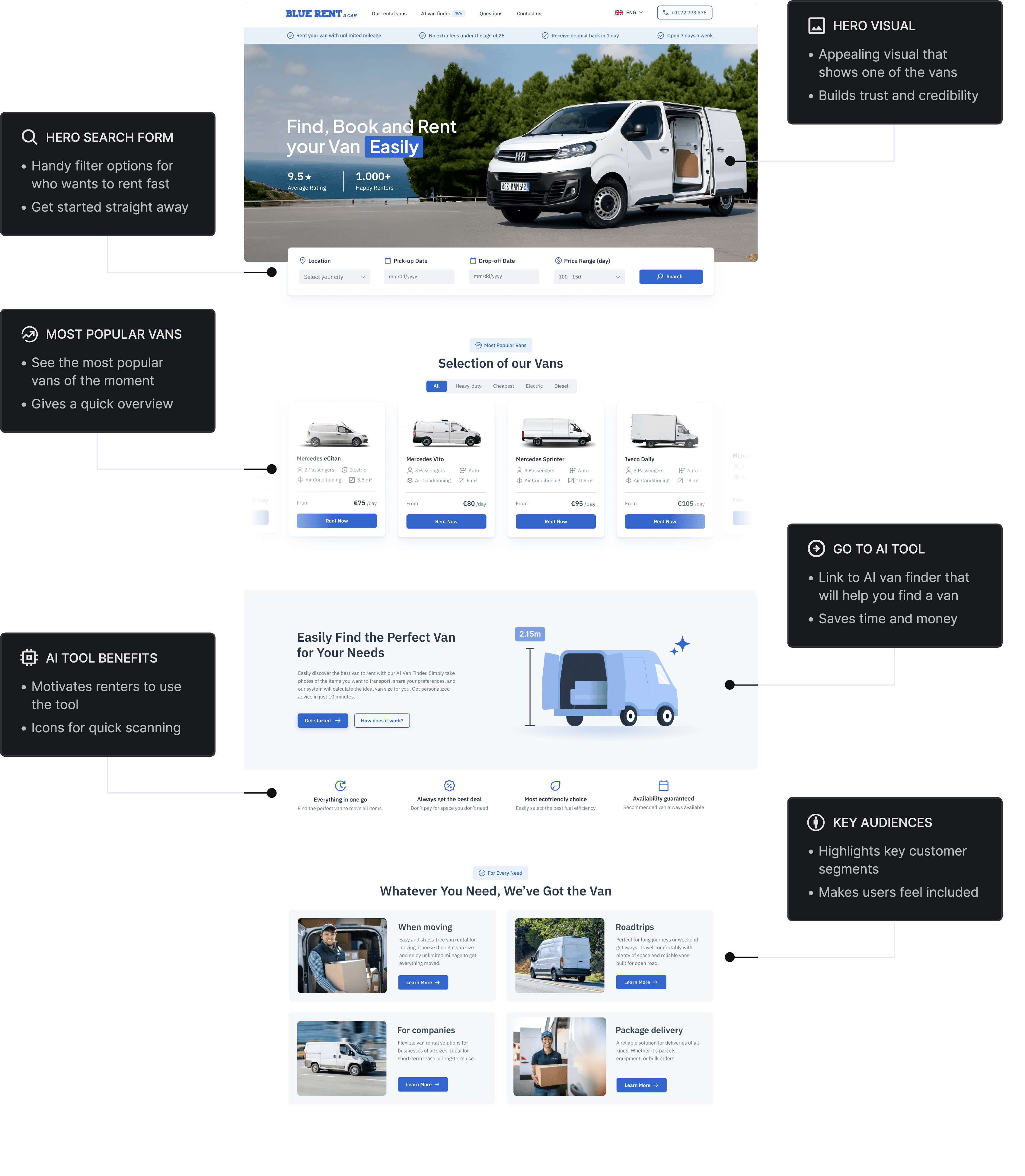
I conducted a heuristic UI analysis that revealed the biggest usability issues, including: a lack of visual hierarchy, an outdated lay-out, and too many call-to-actions. These issues reduce trust and clarity.
Blue Rent Website
WEBSITE REDESIGN
The Final Product
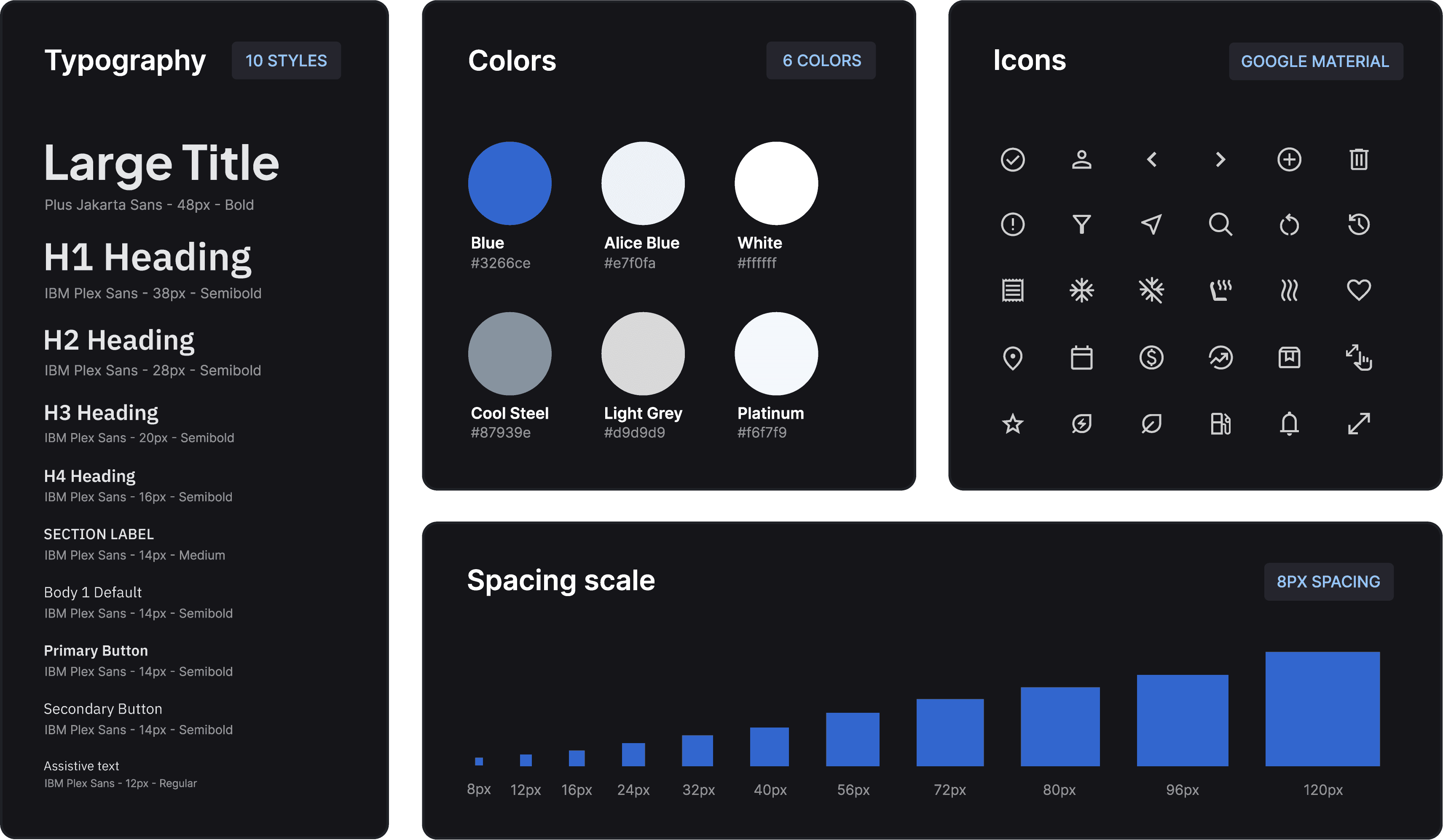
Creating a Design System
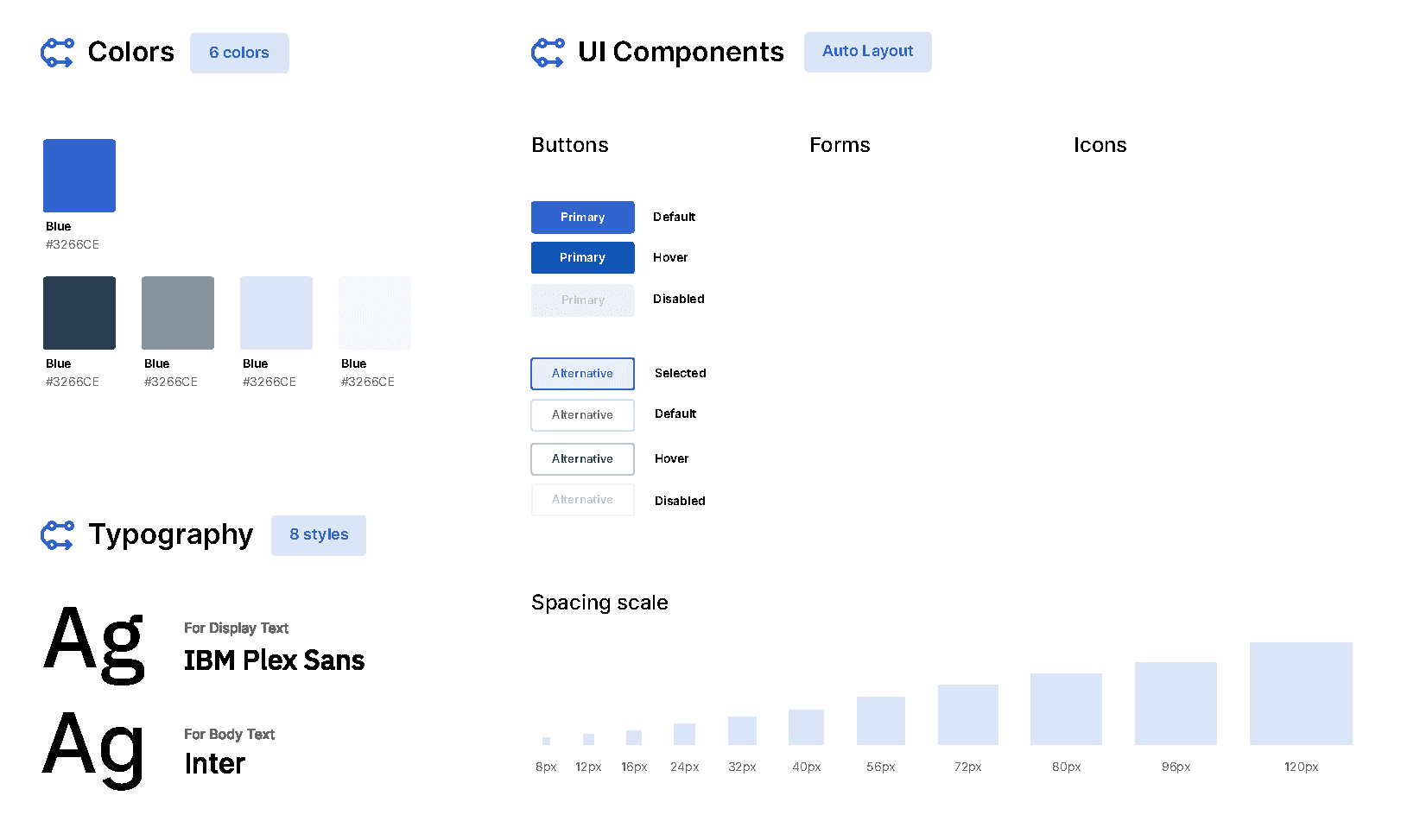
To ensure a consistent website appearance and speed up the design process, I created a mini design system defining typography, colors, spacing, and icons.
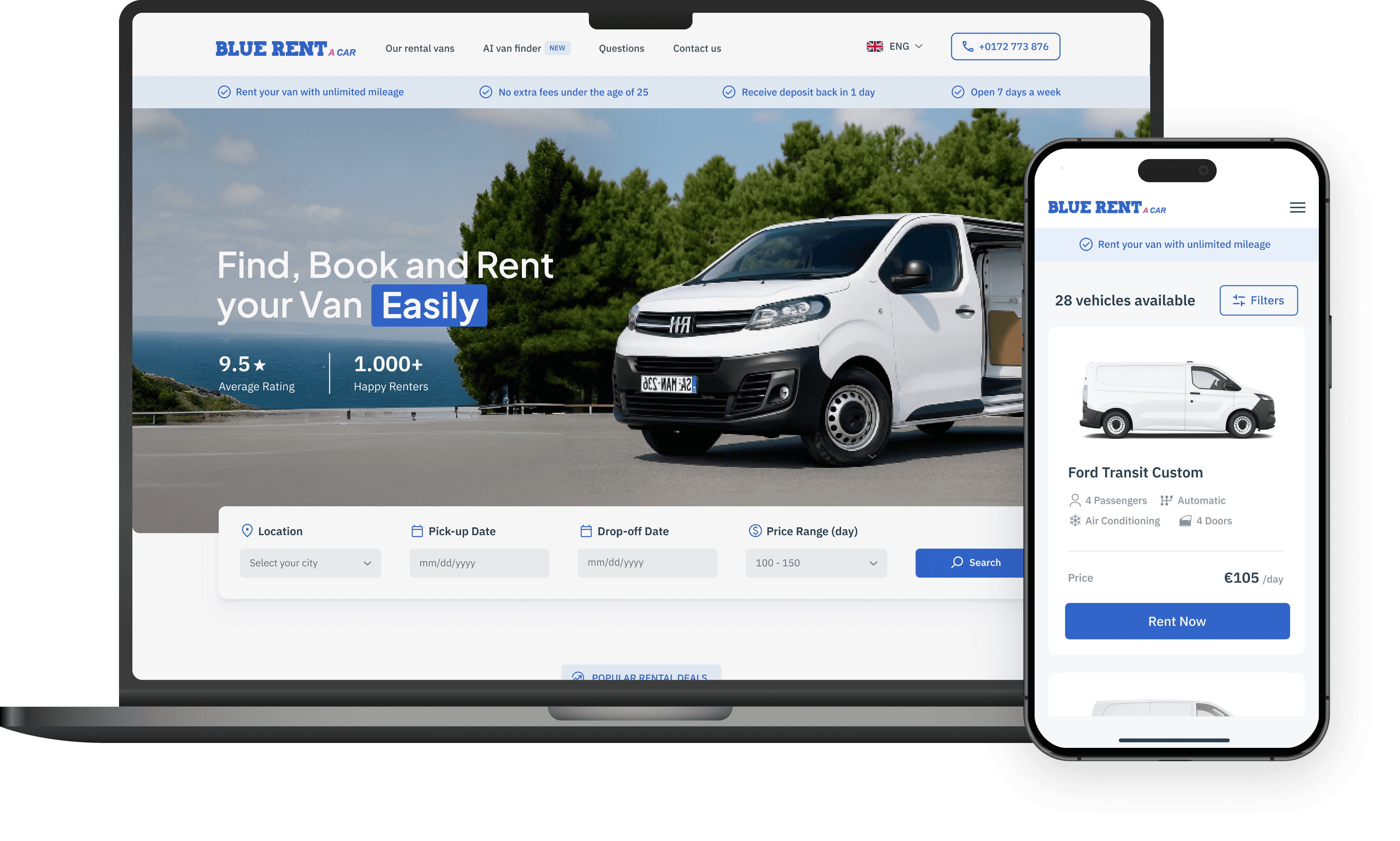
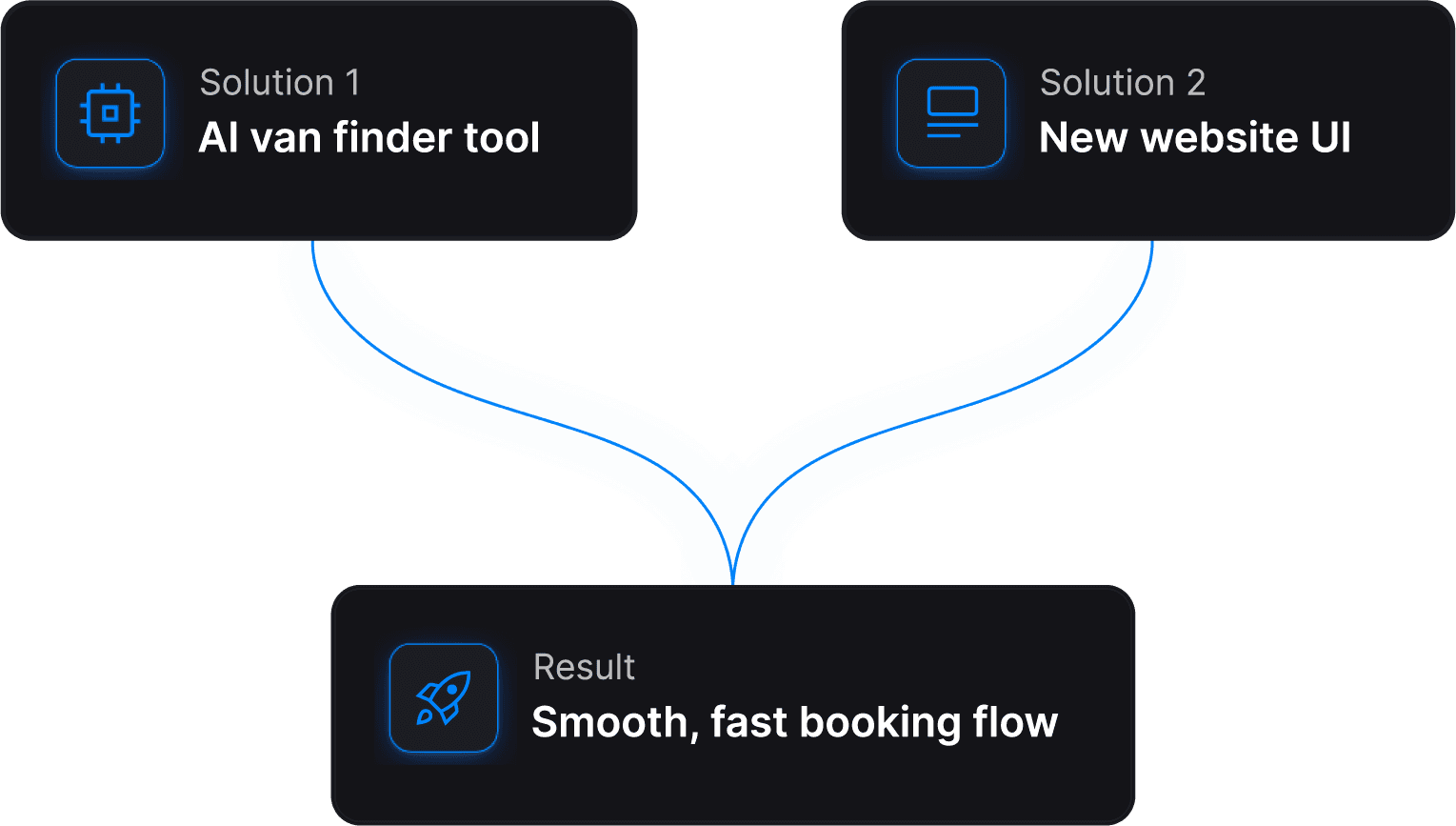
We redesigned the website UI to look more modern and trustworthy, and improved call-to-actions to drive higher conversions.
A Fresh Website UI

By introducing ‘AI van Finder,’ I removed four steps from the booking process, significantly reducing booking time while helping renters choose the van that best fits their needs.
Faster and easier booking, powered by AI
10
80%
45%
12
Participants tested the prototype
Task rate of completion
Improved time on task
Weeks total time to deliver
01. UX RESEARCH
Understand user needs and define the project goals.
02. ANALYZE
Brainstorm ideas and explore multiple design directions.
03. DESIGN
Develop high-fidelity designs, focusing on usability and aesthetics
Test & refine

Conduct usability testing to identify and solve potential pain points.
Project Learnings
For my first end-to-end app design, I got to dive into every step: from early research to final UI. Along the way, I learned that good design isn’t just visual; it’s also about using the right words and giving users the context they need. Overall, I learned a lot and am excited for future projects!
The Next Steps
For future development, I recommend further user research to better understand user needs. Besides adding new features, it would be valuable to offer more customization options, letting users tailor their dashboards to the data they find most important.